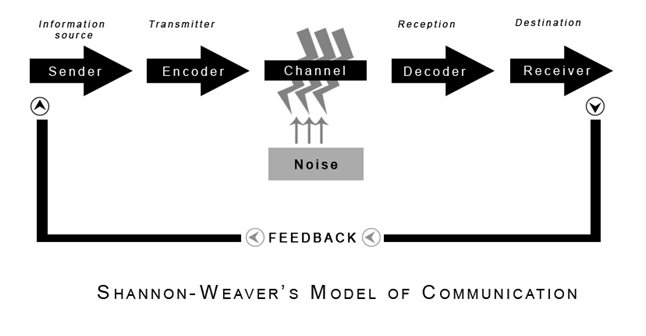
Shannon and Weaver Model of Communication was created by Shannon and Weaver in 1948. Shannon was an American mathematician, Electronic engineer and Weaver was an American Scientist who who worked together to build a model that establish effective communication between the sender and the receiver. While the model was designed to develop communication between the sender and the receiver, it also find factors that affects the communication process which are known as “Noise”.
Shannon and Weaver Model covers six concepts that are sender, encoder, channel, decoder receiver and noise.
- Sender: Where the message or the information are originated from
- Encoder: Where the message is converted into signals
- Channel: Medium that is used to send the message
- Decoder: Where the message will be converted from signals into message
- Receiver: Where the message will arrive to.
- Noise: Physical disturbance that may distract the channel during the transmission where it may affect the communication flow or the receiver may not receive the correct message.
Example of Shannon and Weaver Model
John made a call to his friend Mike “Please bring my backpack”. During the call, however; noise appeared from the John’s background and his friend only received “Please bring” only. Hence, his friend asked John “What do you want John”.
- Sender: John
- Encoder: Telephone
- Channel: Cable
- Noise: Background noise
- Reception: Telephone
- Receiver: Mike
Because of the background noise, Mike was not able to decode John’s message.

How complete is the model?
The model is not completed. While Shannon and Weaver model is a very simple model, human interactions and communication are a lot more complicated. The model does not account numerous factors like non-verbal communication. It does not take account people’s body language or people’s tone in communication. The model does not express the senders and receivers feelings or emotions. Non-verbal communication is very important as it plays a significant role with the verbal communication. Non-verbal communication can contradict our word, reinforce our opinion and substitute the meaning of our sentences. As non-verbal communication can either emphasize point or contradict it, people will sync body language with the emotions. Therefore, not including non-verbal communication is a major limitation of the model as it fails to help in face to face communications that involves non verbal communications.
Dwyer’s Model
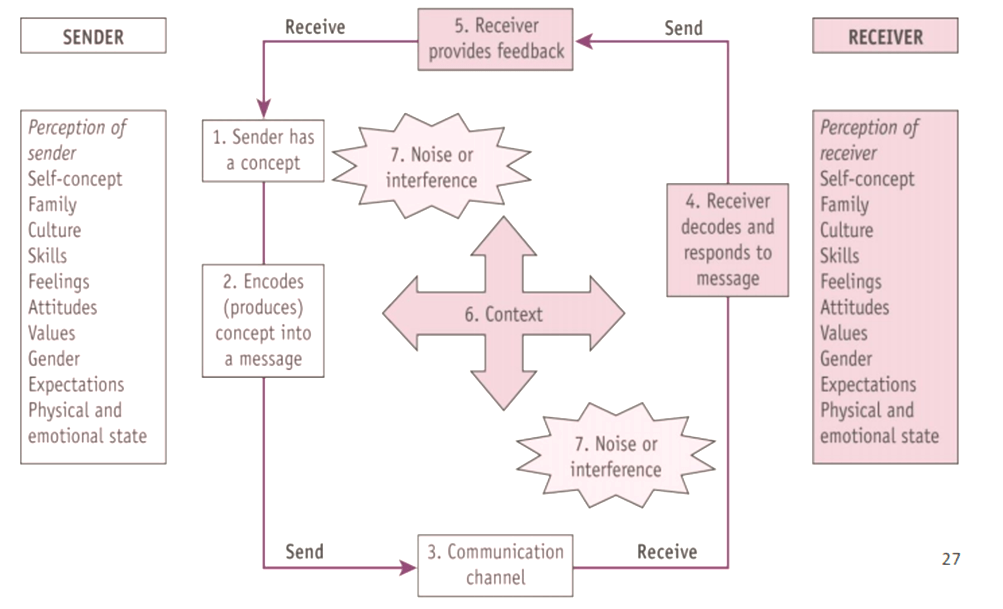
Dwyer’s model of communication is more completed and better model to represent communication. Not only does the model includes the concepts from the previous model, Shannon and Weaver Model, but also it also includes perception of the sender and receivers. It includes perceptions of sender and receivers such as culture, feelings, values and etc, which helps in face to face conversations. While Shannon and Weaver Model provides more simple and basic model, Dwyer’s model provides more detailed and comprehensive model.
Conclusion
Shannon and Weaver’s model of communication is not complete. It only provides basic and simple understanding of how communication work between sender and receiver. It does not help in face to face conversation as it does not consider non-verbal communication. Even though the model is not complete, it is still very important as it serves as a “mother of all models”.
 Sol's blog
Hi Sol, Interesting blog post! You did a great job on the analysis of the Shannon and Weaver model and it is not too wordy that make the post boring. I love how you used point forms to further explain the components of the model and also give examples of it. I agree with you on that the model is too simple for complicated communication and can only be used on simpler communication. You also provided the Dwyer’s model and explained why is it a better representation model to be used in communication than the Shannon and Weaver model. Lastly the one thing that captures my attention is the figure image of different body languages, I’ve learned a lot from it and hopefully that it can be used in future. Awesome post! Cheers!
LikeLike
Hey Sol, great post! With the help of models, simple example and images, and also your careful analysis of the model, you helped me in having a better understanding of the model and what is it trying to relay. It is also great that you provide an alternative model to prove that the Shannon and Weaver model is incomplete, as it didn’t took the account on the perceptions of the Sender and the Receiver, like emotions. In our day-to-day communication, it is best to take in account on perceptions of both the sender and the receiver, so as to reduce the chances of miscommunication and conflicts within friends, family or colleagues. Keep up the good work, and all the best for your future post!
LikeLike
Greetings Sol, thanks for the informative post. Good job in including the creators of the model. By breaking down the model into its component, it helps us readers to understand the model better. I agree that the model is incomplete as it lacks the non-verbal part of our day to day communication. Having non-verbal communication like emotions and facial expression can help us to reduce the chance of misunderstanding or even help us avoid conflict. It would be better if you could include an example of how dwyer’s model comes into effect in our everyday life. Overall, this is a great post. Peace 🙂
LikeLike